Categories
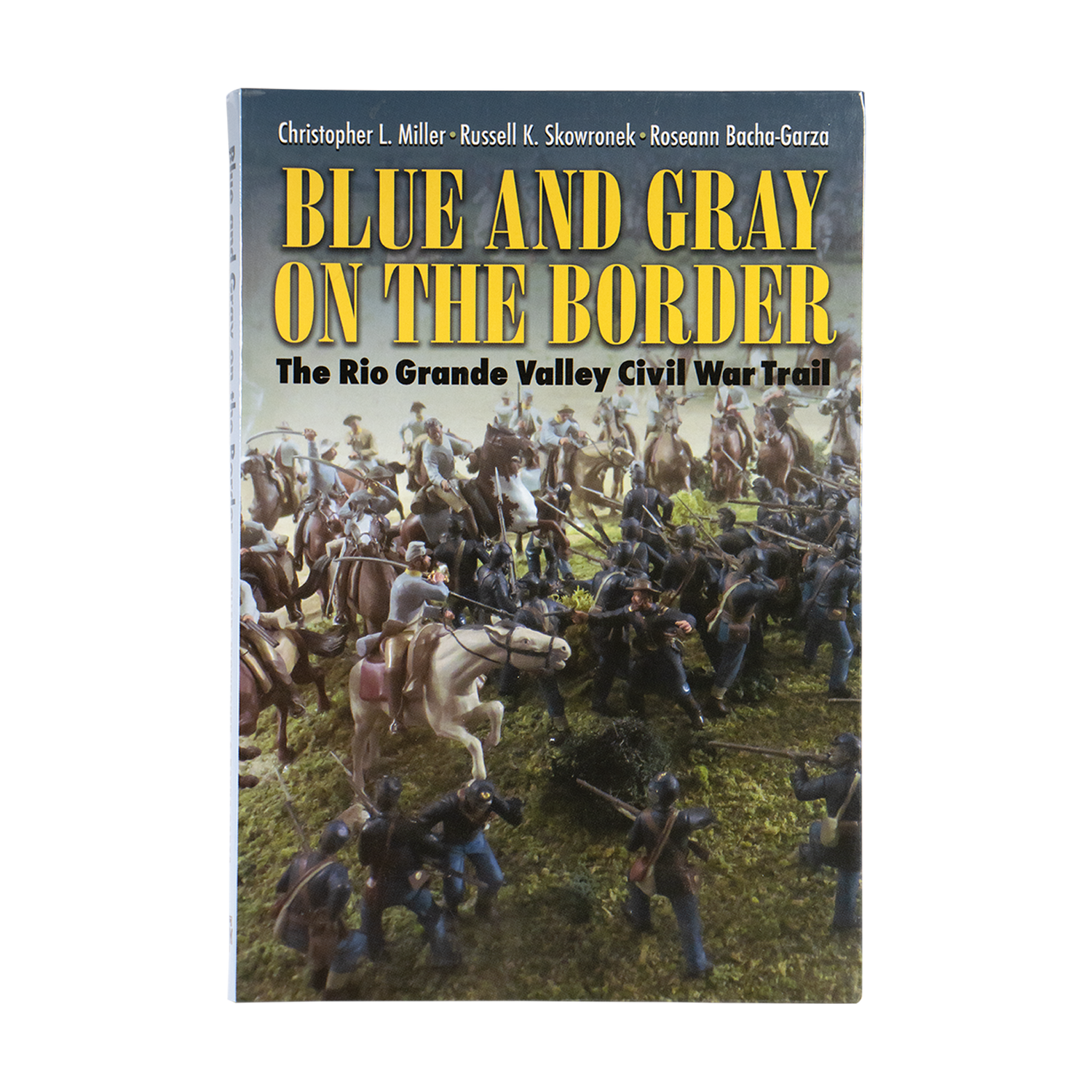
Blue and Gray On the Border: The Rio Grande Valley Civil War Trail
$30.31
In stock: 1 available
Product Details
A handy, easy-to-use field guide to the Civil War sites of the Lower Rio Grande Valley..
Most general histories of the Civil War-including quite a few that focus on Texas-pay scant attention to the many important military events that took place in the Lower Rio Grande Valley along the Texas-Mexico border. It was here, for example, that many of the South’s cotton exports, all-important to its funding for the war effort, were shuttled across the Rio Grande into Mexico for shipment to markets across the Atlantic. It was here that the Union blockade was felt perhaps most keenly. And it was here, in the Texas-Mexico borderlands, where longstanding cross-border rivalries and shifting political fortunes on both sides of the river made for a constant undercurrent of intrigue. And yet, most accounts of this long and bloody conflict gives short shrift to the complexities of the ethnic tensions, political maneuvering, and international diplomacy that vividly colored the Civil War in this region.
Now, Christopher L. Miller, Russell K. Skowronek, and Roseann Bacha-Garza have woven together the history and archaeology of the Lower Rio Grande Valley into a densely illustrated, handy travel guide to the important historic and military sites of the Civil War period. Blue and Gray on the Border: The Rio Grande Valley Civil War Trail integrates the sites, colorful personalities, cross-border conflicts, and intriguing historical vignettes that outline the story of the Civil War along the Texas-Mexico border. This resource-packed book, designed to complement the website Rio Grande Valley Civil War Trail (www.utrgv.edu/civilwar-trail) and other interpretive materials developed by the authors, will aid heritage travelers, students, and history buffs in their discovery of the rich, previously little-known history of the Civil War in the Lower Rio Grande Valley.
By connecting events and people with specific places, historic sites, and markers, Blue and Gray on the Border does something that has not been done before-it takes readers on a tour of a six-county region, two hundred miles from Laredo to Brownsville, and places the Rio Grande Valley in the broader context of American History